

Founder and CEO of embarc
Evolutionary Architecture, Agile Organizations, ADES
Stefan Toth advises developers, teams and companies on software architecture. Sound, clear and effective. His experience ranges from the banking and insurance sector to security-critical industries and support for internet start-ups. In addition to the broad technological context, his methodological experience from agile projects, architecture assessments and IT transformations is his greatest asset. Stefan is a TTA (Team Topologies Advocate).








This article encourages leaner review approaches and presents LASR, a concrete procedure that you and your development team can use directly to assess your situation—without extensive preparation or involving many participants.
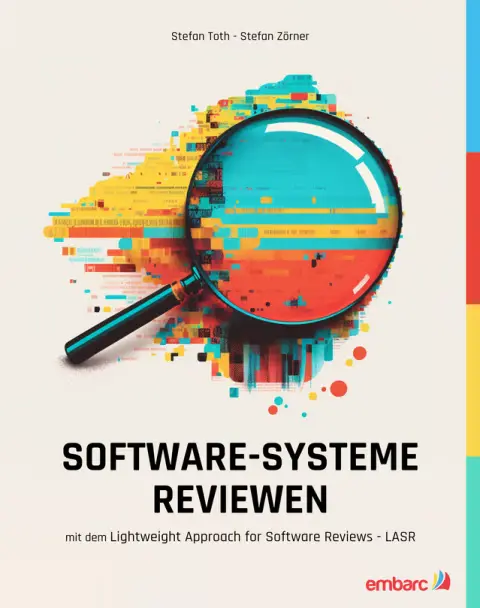
Architecture reviews enable you to identify weaknesses and potential in software solutions, validate decisions, and evaluate improvement measures. This book introduces you to lightweight reviews that you can carry out yourself or in a small team after reading it!
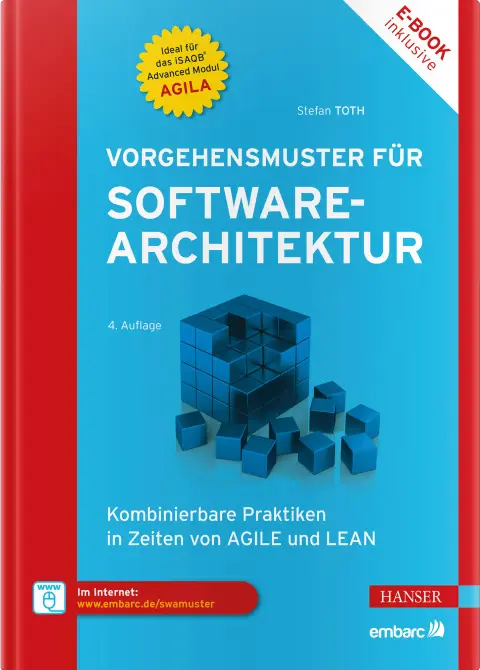
Modern software architecture should be agile and practical. This book by our trainer Stefan Toth offers lightweight patterns that can be flexibly integrated into projects - without rigid specifications.
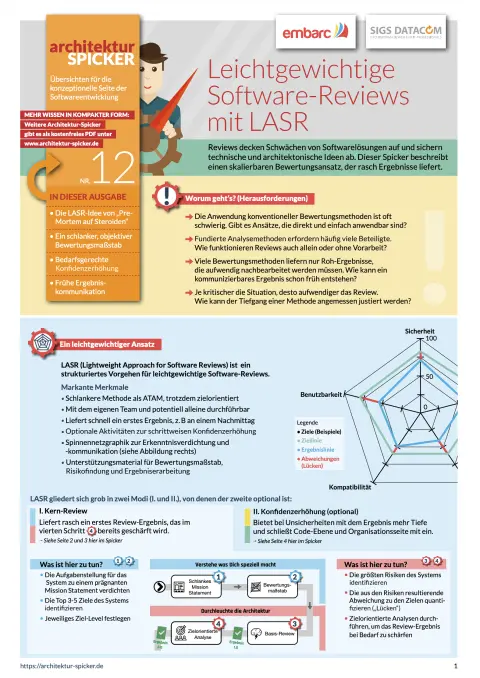
This cheat sheet describes a scalable assessment approach that quickly delivers initial, presentable results on four richly illustrated pages.
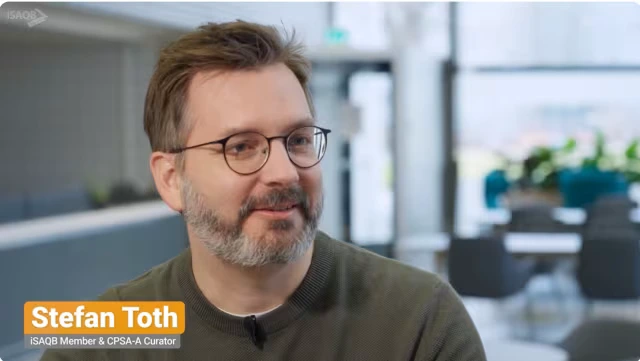
In this iSAQB® curator interview, Stefan Toth, curator for iSAQB® CPSA-A® ARCEVAL and iSAQB® CPSA-A® AGILA, reveals why agility and software architecture go well together. You can also find out more about the architect:inenn role and the challenges in an agile team.
Architecture is stable, software development is agile - there are constantly new requirements and new sprints with new plans. How do these two worlds fit together? In this episode Stefan Toth discusses these and other questions about agility and architecture - from team to company level.

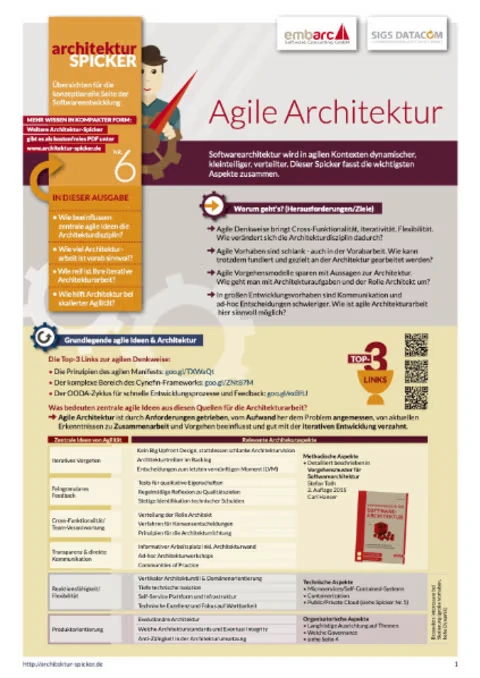
In agile contexts, software architecture is becoming more dynamic, fragmented, and distributed. Agile thinking brings cross-functionality, iterativity, and flexibility. This is changing the discipline of architecture. In large development projects, communication and ad hoc decisions are more difficult. How can agile architecture work be done effectively in this context? The sixth edition of our architecture cheat sheet summarizes the most important aspects.
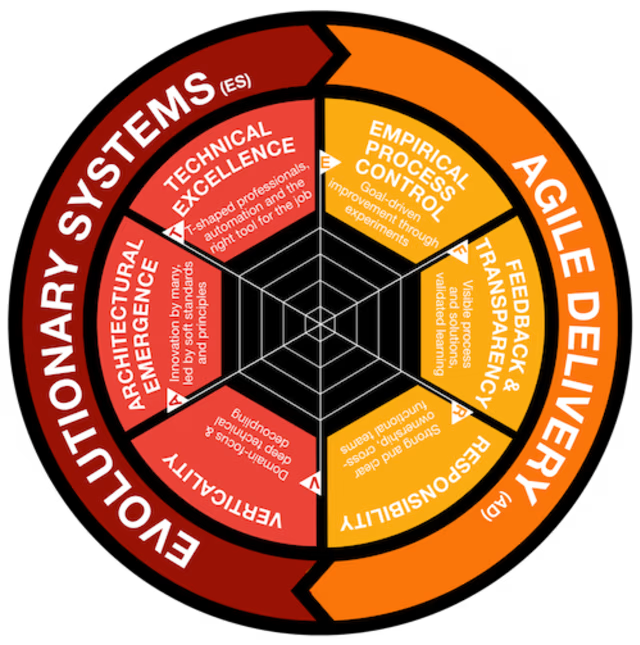
The ADES Framework is a learning framework targeted at agile organizations. It ties together technical and organizational aspects and defines six "learning sectors". Agile organizations need to continuously improve and work on these sectors to achieve the goal of sustainable agile practice.

Fresh architecture straight to your inbox. Our newsletter comes out in German every two months – sign up and be the first to hear about new trainings and topics.


